

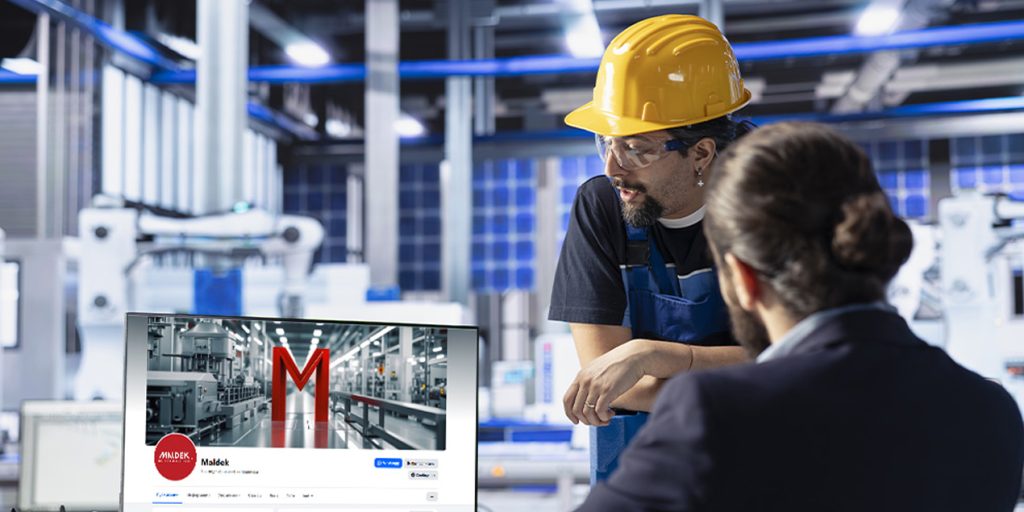
Over the last few decades, the People’s Republic of China has built a vast and diversified machinery and equipment-manufacturing sector that serves nearly every industrial niche — from construction cranes to packaging systems, from robotics to plastic and chemical processing units. That scale and diversity enable China to act as the “factory to the world”, fulfilling a broad range of industrial needs efficiently and at scale.
In 2024, Chinese machinery exports — spanning everything from construction machinery, industrial parts, to complete equipment — amounted to about US$ 869.36 billion, making up roughly 24.3% of China’s total export value.
The dominance is especially visible in heavy equipment and construction-machinery exports: between January and April 2025 alone, Chinese construction machinery exports reached US$ 18.07 billion, marking a 9.01% year-on-year increase.
This broad supply base, covering everything from heavy construction machines to fine-tuned production lines for packaging, textiles, electronics, and more — gives China a unique competitive edge: global buyers can source practically any industrial line from a single country.
Global Leadership in Exports
1. Competitive Advantages: Cost, Government Support & Export Logistics
Chinese machinery is not just ubiquitous — it’s also highly competitive in terms of cost and delivery conditions, for several structural reasons:
- Many Chinese machinery manufacturers benefit from subsidies, low-interest loans, subsidized shipping, and other support from the state, which lowers their production and export costs considerably, enabling them to undercut foreign competitors globally.
- Because China’s supply chain is so comprehensive — from raw materials to components, to assembly — manufacturers don’t need to rely heavily on imports from other markets, reducing exposure to supply-chain disruptions and lowering costs. This vertical integration supports both efficiency and price competitiveness.
- The logistics network and export infrastructure are well-developed, making shipment of heavy machinery and complete production lines viable worldwide — even to far regions.
These factors make Chinese-made machinery and lines attractive to businesses globally seeking cost-effective, reliable, and scalable manufacturing solutions.
2. Continuous Industrial Upgrading & Technological Advancement
China has not rested on low-cost production alone. In recent years, its machinery and industrial-equipment sector has undergone significant upgrading — embracing higher-end machine tools, automation, and green/clean-energy equipment. This evolution enhances both quality and versatility, allowing Chinese-made machinery to compete not only on price, but also on performance and technological sophistication.
According to recent data, in 2025 the machinery industry in China saw growth across many sub-sectors: general-equipment manufacturing rose 8.3%, vehicle production 10.9%, electrical equipment 11.9%, and instruments/meters 7.1%.
Specifically, China’s output of metal-cutting machine tools reached ~ 480,000 units (up 13.9% YoY), and industrial robot production rose to ~ 447,000 units (up 32.9% YoY).
As a result, China is not only supplying standard machinery — but also high-precision machine tools, industrial robots, green-energy related equipment (e.g. solar, wind), and more advanced manufacturing infrastructure. This helps clients worldwide build modern, efficient, automated production lines that meet high standards.
In short: Chinese machinery offers a powerful combination of affordability, scale, and improving technological sophistication.
3. Global Demand & Industrialization
Because many emerging economies, as well as businesses in established markets, are either expanding existing manufacturing or building new production facilities — they need turnkey solutions: full production lines, machinery, setup support, logistical help, compliance, and more. That demand perfectly aligns with China’s strengths.
Countries and companies looking to start food & beverage processing, textile factories, packaging plants, plastic/chemical processing, electronics assembly or construction-material production often prefer sourcing complete production lines from China — given the relative affordability, variety, and proven reliability of Chinese systems.
The breadth of China’s manufacturing base enables suppliers to deliver complete systems across industries — meaning that buyers don’t have to piece together components from different countries; they can get everything from one provider.
In 2025, with many businesses seeking to scale cost-effectively, decentralize supply chains, or take advantage of lower-cost manufacturing, Chinese-made production lines remain among the most in-demand globally.
Maldek — Bridging Global Businesses to China’s Manufacturing Power
One of the companies that facilitates this global flow of Chinese-made industrial equipment is Maldek Trading Co Ltd.
What Maldek Does
Maldek positions itself as a global partner that connects clients worldwide with China’s top machinery and production-line manufacturers.
- Maldek sources and delivers complete production lines — from food & beverage processing, textiles and garments, packaging and labeling systems, to plastic/chemical processing, electronics & electrical assembly, construction-materials plants, and more.
- The service is more than just a facilitator: we inspect every piece of equipment, manage the full logistics and documentation, and offer legal protection via technical agreements — providing clients with a secure and smoother path compared to dealing directly with factories.
- We claim a global footprint — delivering to Armenia, Russia, Kazakhstan, Georgia, Europe, the US.
- Maldek began in 2018 focusing on construction machinery, but has since expanded to a full suite of production-line solutions across many industries.
Why Companies Choose Maldek Instead of Directly Buying from Factories
Because while Chinese machinery is competitive and comprehensive, sourcing directly overseas can be fraught with risks: language/cultural barriers, quality control, regulatory documentation, shipping logistics, and after-sale support. A specialized bridging company like Maldek adds value by:
- Quality assurance and risk mitigation — Maldek performs inspections, verifies performance, and ensures legal protection through technical agreements.
- Logistics and documentation handled — For companies outside China, coordinating export documentation, customs, shipping, and delivery across long distances can be complex. Maldek manages this for clients.
- Full turnkey production lines — Rather than sourcing individual machines (which might come incompatible, or require extra engineering), clients receive end-to-end, ready-to-operate production lines across industries.
- Saves time and resources, enabling businesses to focus on their core operations (sales, marketing, distribution…), rather than navigating supply-chain and manufacturing procurement.
For companies — especially small to mid-size enterprises, or firms in emerging markets — such a partner can dramatically reduce the complexity of setting up manufacturing operations.
Why Global Demand for Chinese Production Lines
China’s machinery output and exports remain robust and growing. The manufacturers are increasingly investing in technology upgrades — automation, robotics, cleaner/green equipment — improving the competitiveness of their lines even beyond just low cost.
Many industries worldwide — especially in emerging economies or developing regions — still need to build manufacturing capacity from scratch, and Chinese “complete production lines” offer the easiest, most comprehensive path.
Businesses often lack the expertise, local contacts, or infrastructure to manage overseas procurement themselves — making intermediaries/partners an attractive and practical choice.
Therefore, global demand for Chinese-made production lines, and for expert sourcing partners such as Maldek, seems likely to continue rising. For companies looking to expand manufacturing, diversify supply chains, or start new production — leveraging China’s industrial backbone via a trusted intermediary is often more practical, cost-efficient, and secure than trying to assemble everything piecemeal or domestically.
Challenges and Considerations
It’s not all smooth sailing. While Chinese machinery and production lines offer strong advantages, there are caveats:
- As one external website indicated, some online platforms sourcing Chinese machinery may have uncertain trust scores.
- Quality assurance depends heavily on inspection and due diligence. Even if equipment is generally good, mismatches in specifications, standards, or expectations (e.g. European or US safety/quality standards) may arise.
- Logistics, shipping, customs, and compliance can still be complicated — even with a partner — especially for heavy industrial equipment.
- Post-purchase support, maintenance, spare parts, training — these matters need to be negotiated carefully, especially for highly technical production lines.
- Currency fluctuations, trade regulations, tariffs, and geopolitical risks may affect costs or delivery timelines, especially for cross-border shipments.
Thus, while there is tremendous upside in accessing Chinese manufacturing, it requires careful planning, vetting of suppliers/intermediaries, clear contractual safeguards, and often — realistic expectations about lead times, after-sales, and integration.
China’s Industrial Supremacy
In 2025, China remains — decisively — the engine of global industry. Its unmatched machinery output, competitive pricing, wide product variety, and continuous industrial upgrading make it the go-to source for many manufacturing needs worldwide. For businesses aiming to build or expand production lines — whether in food, textiles, packaging, plastics, electronics, construction materials, or other sectors — Chinese-made complete production lines offer a compelling value proposition.
At the same time, companies like Maldek Trading Co Ltd act as critical facilitators — bridging the gap between global buyers and Chinese manufacturing power, providing inspection, logistics, legal safeguards, and turnkey solutions. This lowers the barrier to entry for businesses that otherwise might struggle with the complexity of direct overseas sourcing.
For firms that want efficient, scalable, and cost-effective manufacturing, leveraging China’s industrial capacity through a reliable intermediary remains one of the smartest strategic moves in 2025 — and likely for years to come.